
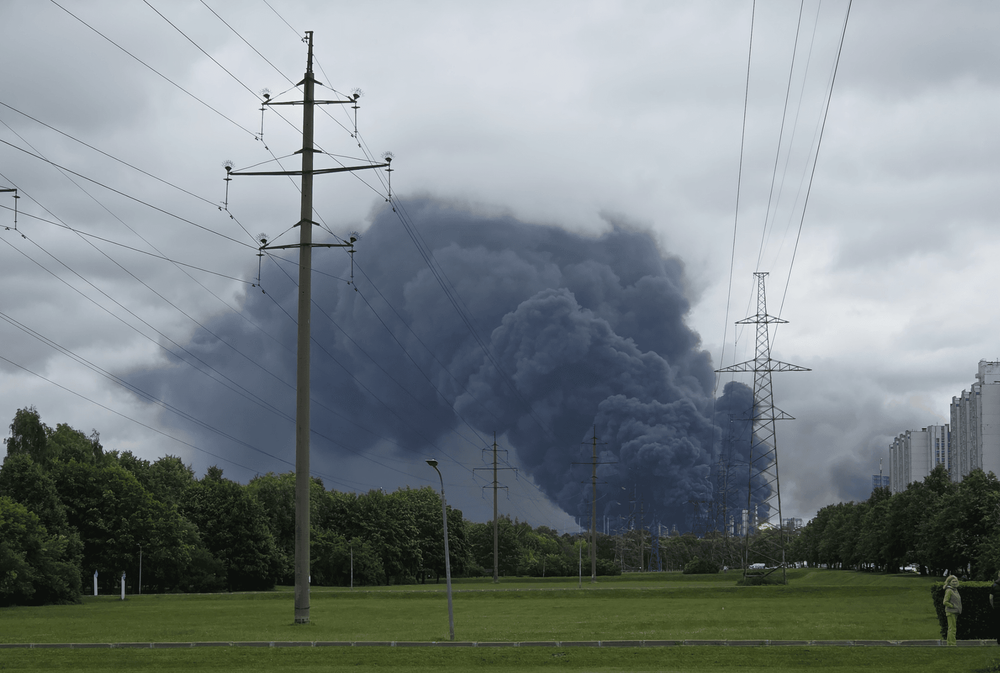
Russia's internet shutdowns disrupt warnings about incoming drone attacks
Russia’s growing restrictions on mobile internet and cellular service are making it harder for people to receive warnings about incoming Ukrainian drone and missile attacks. In some cases, alerts arrive only after a strike or do not reach residents at all.
Russian authorities routinely restrict mobile internet during drone attacks, saying the shutdowns are needed to prevent drones from using cellular networks for navigation or targeting. But digital rights experts and local reports say the restrictions can also disrupt Telegram warnings, emergency apps and other online alert systems.
In some regions, the problem is made worse by authorities choosing not to activate air raid sirens, leaving residents more reliant on digital warnings that may be delayed or unavailable when internet access is restricted.
Sarkis Darbinyan, a Russian cyberlawyer and expert at RKS Global, said warnings issued by Russia’s emergency services can reach people through numerous channels, including SMS, push notifications, television, radio, sirens, loudspeakers, government websites and official Telegram channels.
But during mobile internet shutdowns, many of those channels become unreliable or stop working altogether.
“People lose access to information and, as a result, are unable to make decisions that could help save themselves and their families during strikes,” Darbinyan told Recorded Future News.
Left without warning
Over the weekend, as Russians voted in parliamentary elections, authorities in the Moscow region did not activate air raid sirens or send SMS warnings during a major Ukrainian drone and missile attack, even as mobile service was restricted, according to the Institute for the Study of War (ISW).
“Russian authorities appear to have prioritized achieving a high voter turnout ... over public safety,” ISW said.
Similar problems have been reported elsewhere in Russia.
During a Ukrainian drone attack on the Kupol electrical and mechanical plant in the Russian city of Izhevsk last year, no air raid siren sounded before the strike, according to local media reports. Mobile internet disruptions also prevented residents from accessing warnings on Telegram.
“The communications restrictions did not knock the drones off course. But the three people who were killed could have survived, and the 35 who were injured could have escaped unharmed, if they had been warned of the danger in time,” Russian digital rights project Na Svyazi said at the time.
In the western city of Cheboksary this month, residents reported losing not only mobile internet but also regular cellular service. Some said calls were immediately disconnected or would not go through.
The disruption also affected attack warnings, according to Na Svyazi. Some subscribers received no missile or drone alerts, while others received dozens of identical messages. Local telecom operators attributed the restrictions to security measures.
The problems extend beyond internet shutdowns.
An investigation published earlier this month by Novaya Gazeta Europe found that Russian authorities frequently do not activate air raid sirens during attacks. The outlet estimated that at least 36 civilians were killed across Russia and Russian-occupied Crimea this summer in strikes during which sirens were not activated.
That figure was a minimum estimate because failures to sound sirens are not always reported, the outlet said. In the Moscow region, strikes without sirens accounted for 68% of fatalities from attacks, according to its calculations.
Russian law requires regional and municipal authorities to provide timely warnings about threats but does not require sirens to be activated for every attack. Authorities can instead warn residents through SMS messages, apps, television or official government channels. Those alternatives, however, are not always reliable.
Unreliable alternatives
According to Novaya Gazeta Europe, users in seven Russian regions said they almost never received SMS alerts about attacks. In another 32 regions, respondents said messages did not arrive for every attack or sometimes arrived only after a strike had already occurred.
SMS should generally be more resilient than internet-based warnings because it does not require mobile data, Darbinyan said. Push notifications, Telegram channels, government websites and other online services are more vulnerable when authorities restrict internet access.
Russia has tried to keep some approved services available during shutdowns through a government whitelist. The Emergency Situations Ministry app and the state-backed MAX messaging app are included, but Darbinyan said even their push notifications may not work because the notification system relies on Google infrastructure that is not on the whitelist.
Russian authorities argue that mobile internet restrictions can make Ukrainian drone operations more difficult. A drone equipped with a SIM card could use cellular networks to communicate or improve navigation.
But Darbinyan said cellular networks are only one of several technologies drones can use, alongside satellite navigation and radio communications.
“It certainly reduces the number of attacks to some extent, but it is not a panacea,” he said. “Internet access has been shut down for two years now, and there have not been fewer drone attacks. On the contrary, their number has increased.”
The shutdowns have also become more widespread. As of Monday, 59 Russian regions had reported restrictions on mobile internet, according to local internet monitors.
For residents, this creates a paradox, according to Na Svyazi: the “security measures” imposed because drones are approaching can result in people either not receiving danger alerts or receiving incorrect warnings.
“Security means alerts working properly and people having access to communications,” Na Svyazi said.



Daryna Antoniuk
is a reporter for Recorded Future News based in Ukraine. She writes about cybersecurity startups, cyberattacks in Eastern Europe and the state of the cyberwar between Ukraine and Russia. She previously was a tech reporter for Forbes Ukraine. Her work has also been published at Sifted, The Kyiv Independent and The Kyiv Post.